
10 Common Tax Mistakes UK Influencers Make and How to Avoid Them
The UK creator economy is growing rapidly, but so are compliance risks. Many influencers unknowingly make tax mistakes that result in penalties, investigations, or unnecessary overpayments to HM Revenue & Customs. Whether you earn from brand deals, YouTube ads, TikTok partnerships, affiliate marketing, gifted products or digital sales, understanding your tax responsibilities is critical. Here are the 10 most common tax mistakes UK influencers make in 2026, and how to avoid them. 1. Not Registering with HMRC on Time If you start earning income as a content creator, you must register for Self Assessment. Many influencers delay this because they see it as a hobby. Why this is risky:Late registration can trigger penalties and backdated tax liabilities. How to avoid it:Register as soon as your income exceeds the trading allowance or becomes regular. 2. Mixing Personal and Business Finances Using one bank account for everything makes it difficult to track expenses accurately. Why this is risky:You may miss legitimate deductions or claim incorrectly, which raises red flags during compliance checks. How to avoid it:Open a dedicated business bank account, even as a sole trader. 3. Failing to Keep Proper Records Many creators rely on platform dashboards alone. Why this is risky:HMRC requires proper bookkeeping records, not screenshots of earnings. How to avoid it:Maintain structured bookkeeping software or professional accounting support. 4. Not Declaring Gifted Products Gifted items received in exchange for promotion are often taxable. Why this is risky:Non declaration is considered underreporting income. How to avoid it:Record the fair market value of gifts tied to promotional activity. 5. Ignoring VAT Threshold Rules As income grows, many influencers exceed the VAT registration threshold without realising. Why this is risky:Late VAT registration can result in backdated VAT bills and penalties. How to avoid it:Monitor rolling 12 month turnover carefully and seek advice before reaching the threshold. 6. Underestimating Payments on Account Self employed influencers are often surprised by Payments on Account under the Self Assessment system. Why this is risky:This creates unexpected cash flow pressure. How to avoid it:Set aside at least 25 to 30 percent of profits in a separate tax savings account. 7. Claiming Non Allowable Expenses Not everything related to social media qualifies as a business expense. Examples of risky claims: How to avoid it:Only claim expenses that are wholly and exclusively for business use. 8. Staying Sole Trader When a Limited Company Is More Efficient As profits increase, remaining a sole trader can lead to higher tax exposure. Why this matters:Limited companies pay Corporation Tax and allow structured salary and dividend planning. Correct structuring can significantly reduce total tax liability depending on income levels. 9. Not Planning for International Income Platform payments from outside the UK still need to be declared if you are UK tax resident. Why this is risky:Currency conversions, double taxation rules and digital services VAT can become complex. How to avoid it:Keep detailed records of foreign income and exchange rates used. 10. Waiting Until January to Think About Tax Many influencers only think about tax near the 31 January deadline. Why this is risky:Reactive tax filing misses planning opportunities and increases stress. How to avoid it:Adopt year round tax planning rather than deadline driven compliance. Why Specialist Tax Advice Matters for Influencers Influencer income is structurally different from traditional employment. It includes: Generic accountants may not fully understand the nuances of the creator economy. At Accountants4Creators, we specialise exclusively in UK influencers, YouTubers, TikTokers, streamers and digital entrepreneurs. We help you: Speak to UK Creator Tax Specialists If you are earning from content creation and unsure whether you are fully compliant, now is the time to review your structure. 📞 0208 058 2294📧 hello@accountants4creators.com🌐 https://accountants4creators.com/ Book a consultation and ensure you are not overpaying or risking penalties in 2026. FAQs About Influencer Tax Mistakes Do influencers really get investigated by HMRC? Yes. As digital income reporting increases, compliance checks are becoming more common. Are gifted items always taxable? If received in exchange for services or promotion, they are typically considered taxable income. What happens if I forget to register? You may face late filing penalties and interest charges. Is hiring an accountant worth it? For most growing creators, professional advice saves significantly more than it costs by preventing errors and identifying tax efficiencies.
How to Pay Less Tax Legally as a Content Creator (UK 2026 Guide)
If you’re a UK content creator earning from brand deals, YouTube ads, TikTok partnerships, affiliate marketing, digital products or coaching, you are legally required to declare your income to HM Revenue & Customs. But here’s what many creators don’t realise: You are also legally entitled to reduce your tax bill — if you structure and plan properly. This guide breaks down a practical, compliant tax-saving plan specifically for UK influencers, streamers, YouTubers, bloggers and digital entrepreneurs in 2026. Step 1: Choose the Right Business Structure Your legal structure determines how much tax you pay. Sole Trader Limited Company For many full-time creators, switching to a limited company can reduce overall tax exposure when structured correctly. 👉 Choosing the wrong structure is one of the biggest overpayment mistakes creators make. Step 2: Claim Every Allowable Expense Tax is calculated on profit, not revenue. If you earn £80,000 but have £25,000 in legitimate business expenses, you only pay tax on £55,000. Common Allowable Expenses for Content Creators ✔ Cameras, lenses, lighting✔ Editing software & subscriptions✔ Laptop and mobile phone (business use portion)✔ Home office costs✔ Travel for brand collaborations✔ Website hosting & domain fees✔ Marketing & paid ads✔ Accountant fees Many creators under-claim due to uncertainty. Over time, this costs thousands in unnecessary tax. Step 3: Optimise Salary & Dividends (Limited Companies) If you operate via a limited company, tax efficiency comes from balancing: This structure can significantly reduce National Insurance exposure compared to sole trader taxation. However, dividend planning must align with current 2026 dividend tax thresholds and rates. Step 4: Use Pension Contributions to Reduce Tax Pension contributions are one of the most overlooked tax-saving tools. This is particularly powerful for high-earning influencers with fluctuating income. Step 5: Understand VAT Properly If your turnover exceeds the UK VAT threshold, you must register for VAT. However, creators often misunderstand: Incorrect VAT handling can trigger penalties and cashflow problems. Step 6: Time Income & Expenses Strategically Tax planning isn’t just about claiming expenses — it’s about timing. Strategic planning may include: Timing adjustments can smooth cashflow and reduce immediate liabilities. Step 7: Prepare for Payments on Account Many new creators are shocked by their second tax bill due to Payments on Account. Under Self-Assessment, you often prepay part of next year’s tax based on current profits. Without planning, this creates cashflow strain. With planning, it becomes manageable. Common Tax Mistakes That Cost Creators Money ❌ Mixing personal and business spending❌ Ignoring bookkeeping❌ Missing VAT obligations❌ Not setting aside tax monthly❌ Staying sole trader when profits justify incorporation Tax mistakes compound over time. Early structure prevents expensive corrections later. How Specialist Creator Accountants Make the Difference Content creation income is not standard employment income. You may receive: Generic accountants often miss optimisation opportunities specific to digital creators. That’s where specialist support matters. Work With UK Creator Tax Experts At Accountants4Creators, we specialise exclusively in UK influencers, YouTubers, TikTokers, streamers and digital entrepreneurs. We help you: 📞 0208 058 2294📧 hello@accountants4creators.com🌐 https://accountants4creators.com/ Book a consultation today and take control of your tax strategy before the next deadline. FAQs: Paying Less Tax as a UK Content Creator Is it legal to reduce tax as an influencer? Yes — through allowable expenses, pension contributions, correct structuring and strategic planning. When should I switch to a limited company? Typically when profits exceed approximately £30,000–£40,000, but it depends on your personal circumstances. Are gifted products taxable? Often yes — if received in exchange for promotion or services. Can I claim part of my rent? Yes — if you work from home, a proportion may be allowable. Do I need an accountant? Not legally — but most growing creators save significantly more than the cost of professional fees.
Tax for UK Influencers: What Every Creator Must Know in 2026
In 2026, the UK influencer economy is bigger and more complex than ever. With revenue from brand partnerships, content platforms, affiliate marketing, digital products and live streaming, creators must navigate evolving tax rules to stay compliant and maximise profits. This guide explains everything UK influencers need to know about tax — from registration, allowable expenses, HMRC reporting to tax planning strategies tailored to the creator economy. Whether you’re a full-time influencer or earning income on the side, understanding tax obligations protects you from fines, penalties and unnecessary tax bills. 👇 If you’d rather get personalised tax support for your creator income, contact specialist accountants for influencers: 📞 0208 058 2294📧 hello@accountants4creators.com🌐 https://accountants4creators.com/ What Taxes Do UK Influencers Pay in 2026? UK influencers typically deal with several types of tax: 1. Income Tax Income tax applies to earnings from: Income tax is calculated on your net profit — total income minus allowable business expenses. 2. National Insurance Contributions (NICs) If you’re self-employed, you pay Class 2 and Class 4 NICs based on profits. Limited company owners may pay NICs through salary and dividend structures. 3. VAT (Value Added Tax) If your turnover exceeds the VAT threshold in 2026 (check current HMRC limits), you must register for VAT and charge it on eligible services. 4. Corporation Tax If you run a limited company, profits are subject to corporation tax before dividends are paid. Do Influencers Need to Register with HMRC? Yes — most UK influencers are required to register with HMRC as soon as they start earning money. Self-Assessment If you earn income outside PAYE (Pay As You Earn), you must: Limited Company If your influencer business is registered as a limited company you must: 👉 Choosing the right structure can reduce your tax bill — expert advice makes a measurable difference. What Expenses Can UK Creators Claim? Claiming allowable business expenses reduces taxable profits. Common influencer expenses include: ✅ Equipment (cameras, lighting, computers)✅ Software subscriptions (editing, analytics, cloud tools)✅ Home office costs (proportion of utilities, rent)✅ Travel expenses for business✅ Content production and outsourcing costs✅ Marketing and advertising spend Tip: Always retain receipts and keep clear records to support claims during HMRC reviews. Common Tax Pitfalls for Influencers Avoiding these common mistakes will keep you compliant and minimise stress: ❌ Not registering with HMRC in time❌ Failing to keep accurate records❌ Underestimating tax bills❌ Ignoring VAT obligations❌ Misclassifying personal and business costs 👉 Without professional tax guidance, many influencers miss vital deductions or misfile returns — leading to bigger tax bills and penalties. How Tax Planning Works for Influencers Smart tax planning for influencers includes: Strategic planning isn’t optional — it’s essential for growth and sustainability. How Accountants4Creators Can Help At Accountants4Creators, we specialise in tax services for influencers, content creators, bloggers and digital entrepreneurs across the UK. From first-time Self-Assessment to advanced tax planning and VAT advice, we support creators at every income level. 📍 Our Services Include: 🔹 Contact us today for a free consultation: 📞 0208 058 2294📧 hello@accountants4creators.com🌐 https://accountants4creators.com/ FAQs — Influencer Tax in the UK (2026) Q1: Do UK influencers have to register as a business?Yes — if you earn money from content creation, you must register with HMRC either as a sole trader or through a limited company. Q2: When are tax returns due?Self-Assessment tax returns are typically due by 31 January online each year, with payments due the same day. Paper returns are due earlier. Q3: Can I claim home office expenses?Yes — you can claim a proportion of home office costs if you use the space exclusively for business. Q4: What if I earn from platforms outside the UK?Foreign income must still be declared to HMRC if you are UK tax resident. Double taxation treaties may apply. Q5: Should I register for VAT?You must register if your taxable turnover exceeds the current VAT threshold. Voluntary registration can be beneficial in some cases. Final Thoughts In 2026, tax in the influencer economy is complex but manageable with expert guidance. Staying compliant not only avoids penalties, but also unlocks tax savings and business growth opportunities. 👉 Partner with UK creator tax specialists at Accountants4Creators for proactive, tailored tax support.Contact us now — we make tax simple for influencers. 📞 0208 058 2294 | 📧 hello@accountants4creators.com | 🌐 https://accountants4creators.com/
Understanding Cash Flow as a Content Creator

Cash flow is one of the most important financial concepts for any UK content creator. Even if you’re earning good money from brand deals, ads, or affiliate links, poor cash flow management can quickly lead to financial stress. This guide explains cash flow in simple terms and why understanding it is essential for running a successful creator business. What Is Cash Flow? Cash flow is the movement of money in and out of your business. Positive cash flow means you have more money coming in than going out. Why Cash Flow Matters for Content Creators Unlike regular jobs, creator income can be irregular and unpredictable. Payments may arrive: Understanding cash flow helps you stay in control, even when income fluctuates. Common Cash Flow Challenges for Creators 1. Irregular Income Brand deals and platform payments are not always consistent. One month may be strong, while the next is quiet. 2. Late Payments Some brands pay 30–60 days after invoicing, which can affect your ability to cover expenses. 3. Unexpected Expenses Equipment upgrades, software renewals, or travel costs can appear suddenly and impact cash flow. 4. Tax Bills Tax payments are often due months after income is earned. Without planning, this can cause cash shortages. How to Manage Cash Flow as a Content Creator 1. Track Income and Expenses Regularly Keep a clear record of: This helps you see where your money is going. 2. Separate Business and Personal Finances Using a separate business account makes it easier to: 3. Set Aside Money for Tax A good rule is to regularly save a portion of your income for: This prevents cash flow problems at tax time. 4. Keep a Cash Buffer Aim to keep an emergency fund covering: This protects you during quiet months or late payments. 5. Invoice Promptly and Clearly Sending invoices quickly and clearly helps you: 6. Plan for Quiet Periods Content creation often has seasonal dips. Planning ahead helps you manage expenses when income slows. Cash Flow vs Profit: What’s the Difference? You can be profitable on paper but still struggle if payments are delayed. That’s why cash flow matters so much. When to Get Professional Help If your income is growing or becoming complex, an accountant can: This support allows you to focus on creating content. Final Thoughts Understanding cash flow helps content creators stay financially stable, avoid stress, and grow with confidence. Good cash flow management turns content creation from a side hustle into a sustainable business. Need Help? Managing taxes and accounting as a content creator can feel overwhelming. That’s where Accountants4Creators can help. We provide expert guidance, registration help, and accounting services specifically for UK content creators. Contact us today:📞 0208 058 2294📧 hello@accountants4creators.com
Why Creators Should Separate Business and Personal Finances

Separating business and personal finances is one of the smartest decisions a UK content creator can make. Whether you’re an influencer, YouTuber, TikToker, streamer, or blogger, keeping your finances organised helps you stay compliant with HMRC and run your creator business more professionally. This guide explains why creators should separate business and personal finances and how it can save you time, money, and stress. What Does Separating Finances Mean? Separating finances means: This applies whether you are a sole trader or running a limited company. Why Separating Finances Is Important for Content Creators 1. Easier Tax Reporting When business and personal finances are mixed, tax reporting becomes confusing. Separate accounts make it easier to: This reduces errors and saves time. 2. Clear View of Your Creator Income Having separate finances helps you clearly see: This insight helps with better financial planning. 3. Reduced Risk of HMRC Errors Mixing finances increases the risk of: Separating finances keeps your records clean and compliant. 4. Easier Expense Tracking Content creators often have many small expenses, such as: A separate account makes expense tracking simple and organised. 5. Professional Image for Brands Brands and agencies prefer working with creators who operate professionally. Separate finances allow you to: This can lead to better long-term partnerships. 6. Better Cash Flow Management When business income is separate, you can: This helps prevent financial stress at tax time. 7. Essential for Limited Companies If you run a limited company, separating finances is not optional—it’s a legal requirement. Company money must always be kept separate from personal funds. 8. Makes Working with an Accountant Easier Accountants rely on clear records. Separate finances mean: This makes professional support more effective. How to Separate Business and Personal Finances To get started: Even small changes can make a big difference. Common Mistakes Creators Should Avoid Avoid: Good habits early on help your creator business grow smoothly. Final Thoughts Separating business and personal finances isn’t just good practice—it’s essential for long-term success as a content creator. It keeps your finances organised, improves tax compliance, and helps you treat your content creation like a real business. Need Help? Managing taxes and accounting as a content creator can feel overwhelming. That’s where Accountants4Creators can help. We provide expert guidance, registration help, and accounting services specifically for UK content creators. Contact us today:📞 0208 058 2294📧 hello@accountants4creators.com Download Our Free Guide We also offer a free guide for creators to stay on top of finances, track expenses, and avoid tax pitfalls. Perfect for beginners or anyone looking to streamline their content business. 👉 Get your free guide here: https://accountants4creators.com/
How Accounting Works for UK Influencers and Content Creators
How Accounting Works for UK Influencers and Content Creators Being an influencer or content creator in the UK is exciting—but earning money comes with tax obligations, bookkeeping responsibilities, and HMRC compliance. Understanding how accounting works for your digital business is essential to stay legal and financially healthy. This guide explains how accounting works for UK content creators, what income counts, allowable expenses, and how to make HMRC filing stress-free. Why Influencers Need Accounting If you earn money from sponsorships, affiliate marketing, ad revenue, or merchandise, you’re considered self-employed. Even if it started as a hobby, HMRC treats this as running a business. Proper accounting helps you: Tip: Even if you earn part-time from content creation, accounting ensures you’re never caught off guard by HMRC. What Counts as Income for Creators For accounting purposes, all monetary gains count, including: Note: Free products or gifts aren’t counted as income, but if you sell them or get reimbursed, that counts. Learn more about taxable income here. Key Accounting Principles for Creators How Self-Assessment Works Self-assessment is how HMRC calculates the tax and National Insurance you owe. Key points for content creators: Pro Tip: Filing accurately saves money and prevents penalties. Do You Need an Accountant? While it’s possible to do accounting yourself, an accountant can: Even smaller creators often benefit from expert guidance to avoid mistakes that can cost more than an accountant’s fees. For specialized help, Accountants4Creators helps UK content creators with registration, bookkeeping, and tax filing. Contact us today:📞 0208 058 2294📧 hello@accountants4creators.com Tips for Smooth Accounting Free Guide for Influencers We offer a free guide for UK influencers and content creators to help manage finances, track expenses, and file taxes properly. Download it here.
How to Choose the Right Accountant for Your Creator Business
Choosing the right accountant is one of the most important decisions you’ll make as a UK content creator. Whether you’re an influencer, YouTuber, TikToker, streamer, or blogger, a good accountant can save you time, money, and stress—while a bad one can cost you more than you expect. This guide explains how to choose the right accountant for your creator business in simple terms, so you can make a confident and informed decision. Why Content Creators Need a Specialist Accountant Content creation income is different from traditional jobs. You may earn from: A general accountant may not fully understand how creator income works. A creator-focused accountant understands the platforms, income streams, and HMRC rules that apply to digital creators. What to Look for in an Accountant for Your Creator Business 1. Experience with Content Creators Always choose an accountant who has worked with content creators or influencers before. They should understand: This experience helps them give better advice and avoid mistakes. 2. Knowledge of UK Tax Rules Your accountant should be fully up to date with UK tax laws, including: This ensures you stay compliant with HMRC and avoid penalties. 3. Help with Self-Employed Registration If you’re new to content creation, the right accountant will help you: This support is especially important for beginners. 4. Clear Pricing and No Hidden Fees A good accountant should offer transparent pricing. Make sure you understand: Avoid accountants who are unclear about costs. 5. Advice on Expenses and Tax Savings A creator-focused accountant will help you: This can save you a significant amount of money over time. 6. Support with VAT (If Needed) If your income is growing, VAT may become relevant. The right accountant can: VAT mistakes can be expensive, so expert advice matters. 7. Easy Communication Choose an accountant who communicates clearly and responds on time. You should feel comfortable asking questions and getting simple explanations—without confusing jargon. 8. Understanding of Business Structure Options Your accountant should advise whether you should operate as: As your income grows, the right structure can make a big difference to your taxes. Red Flags to Avoid When Choosing an Accountant Watch out for accountants who: These signs can lead to problems later. Benefits of Choosing the Right Accountant With the right accountant, you can: Final Thoughts Choosing the right accountant isn’t just about filing tax returns—it’s about having a trusted partner who understands your creator business. The right support can make managing your finances simple and stress-free, even as your income grows. Need Help? Managing taxes and accounting as a content creator can feel overwhelming. That’s where Accountants4Creators can help. We provide expert guidance, registration help, and accounting services specifically for UK content creators. Contact us today:📞 0208 058 2294📧 hello@accountants4creators.com Download Our Free Guide We also offer a free guide for creators to stay on top of finances, track expenses, and avoid tax pitfalls. Perfect for beginners or anyone looking to streamline their content business. 👉 Get your free guide here: https://accountants4creators.com/
Essential Accounting Terms for UK Content Creators
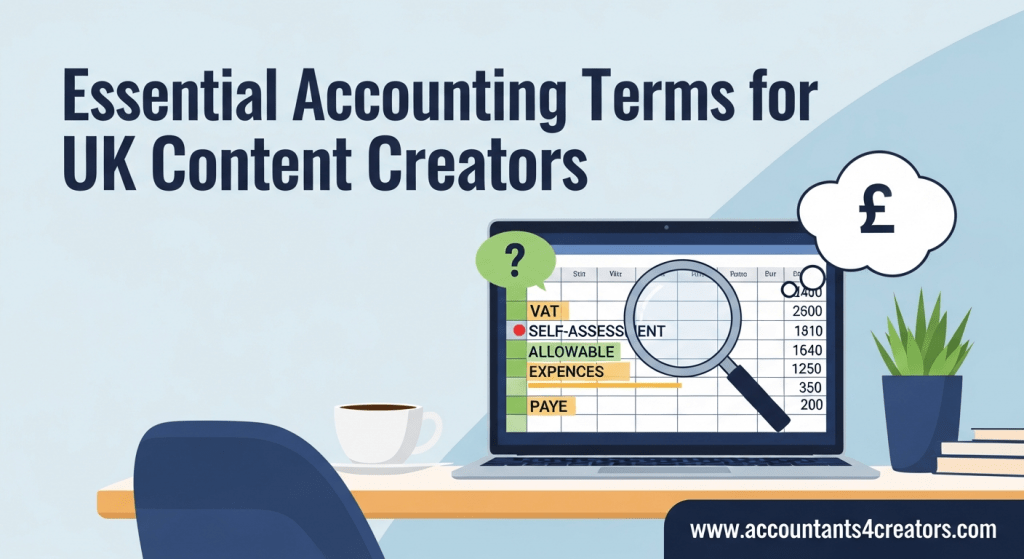
Essential Accounting Terms for UK Content Creators If you’re a UK content creator, understanding basic accounting terms is essential for managing your income, staying compliant with HMRC, and avoiding costly mistakes. Whether you’re a YouTuber, TikToker, influencer, streamer, blogger, or podcaster, knowing these key financial terms will help you run your content business with confidence. This guide explains essential accounting terms for UK content creators in simple, easy-to-understand language. Why Accounting Knowledge Matters for Content Creators As a content creator, you are usually treated as self-employed in the UK. This means: Understanding accounting terms helps you: Essential Accounting Terms Every UK Content Creator Should Know 1. Self-Employed If you earn money from content creation independently, HMRC considers you self-employed. This applies to influencers, freelancers, and creators with brand deals or ad revenue. 2. Self Assessment Self Assessment is the system HMRC uses to collect Income Tax from self-employed individuals. Content creators must: 3. Tax Year (UK) The UK tax year runs from 6 April to 5 April the following year. All income and expenses must fall within this period for reporting. 4. Turnover Turnover is your total income before expenses. For creators, this may include: 5. Profit Profit is what remains after deducting allowable expenses from your turnover.Tax is calculated on profit, not total income. 6. Allowable Expenses Allowable expenses are business costs you can deduct to reduce your tax bill. Common examples for content creators include: 7. National Insurance Contributions (NICs) Self-employed creators usually pay: These contributions count towards state benefits and pensions. 8. VAT (Value Added Tax) You must register for VAT if your taxable turnover exceeds the VAT threshold (£90,000 as of recent HMRC rules). Creators may charge VAT on: 9. VAT Registration VAT registration can be: An accountant can advise which option suits your content business. 10. Invoicing An invoice is a formal request for payment. It should include: Proper invoicing helps maintain professional records. 11. Record Keeping HMRC requires content creators to keep financial records for at least 5 years. This includes: Digital record-keeping tools make this easier. 12. Payments on Account Some creators must make Payments on Account, which are advance payments towards the next year’s tax bill. These are usually due: 13. Limited Company vs Sole Trader Content creators can operate as: Choosing the right structure can save you money. 14. Accounting Period This is the period your accounts cover, usually aligned with the UK tax year. All income and expenses must fall within this timeframe. 15. Accountant A specialist content creator accountant helps with: Having expert support reduces stress and saves time. Final Thoughts Understanding accounting terms doesn’t mean you need to become an expert—but knowing the basics puts you in control of your finances. As your content business grows, professional accounting support becomes even more valuable. Need Help? Managing taxes and accounting as a content creator can feel overwhelming. That’s where Accountants4Creators can help. We provide expert guidance, registration help, and accounting services specifically for UK content creators. Contact us today:📞 0208 058 2294📧 hello@accountants4creators.com Download Our Free Guide We also offer a free guide for creators to stay on top of finances, track expenses, and avoid tax pitfalls. Perfect for beginners or anyone looking to streamline their content business. 👉 Get your free guide here: https://accountants4creators.com/
Do You Need an Accountant as a UK Content Creator?
Do You Need an Accountant as a UK Content Creator? If you’re earning money from content creation—whether on YouTube, Instagram, TikTok, or podcasts—you’re officially running a business. And with business comes tax obligations, financial reporting, and HMRC compliance. The big question many creators ask is: Do I really need an accountant? This guide breaks down why hiring an accountant can save you time, money, and stress, and how to choose the right one for your content business. Why UK Content Creators Consider Accountants Being a content creator means juggling multiple income streams: Handling all this income yourself is possible, but it can be complicated. An accountant can help with: Tip: Even small creators benefit from professional guidance if you want to avoid penalties or late filing fines. Benefits of Hiring an Accountant How an Accountant Helps Content Creators Fun fact: Many creators overpay tax because they miss simple deductions—an accountant can recover money you didn’t know you could claim. Signs You Should Hire an Accountant You might need an accountant if you: Even if you’re a small creator, having an accountant ensures peace of mind and can prevent mistakes that cost more than their fees. DIY vs. Professional Accounting It’s possible to handle finances yourself using spreadsheets and HMRC’s self-assessment portal. But consider: If this feels overwhelming, hiring an accountant is usually worth the investment. Choosing the Right Accountant Look for an accountant who: Pro Tip: Specialized accountants for creators, like Accountants4Creators, understand the nuances of platform income and creator expenses better than generic accountants. Getting Help At Accountants4Creators, we help UK content creators: Contact us today:📞 0208 058 2294📧 hello@accountants4creators.com Don’t let tax stress take away from your creativity. Focus on your content—we’ll handle the numbers. Free Guide for Creators We also offer a free guide to help creators understand taxes, manage expenses, and stay compliant. Perfect for new or growing creators. Download your free guide here.
Accounting 101 for UK Content Creators
Accounting 101 for UK Content Creators If you’re a content creator in the UK, whether on YouTube, Instagram, TikTok, or podcasts, understanding the basics of accounting is crucial. Earning money from content creation means you’re running a business even if it feels like a hobby. Getting your accounting right from the start saves headaches, fines, and stress down the line. This guide walks you through self-employment registration, key dates, tax basics, and how to stay compliant with HMRC. No jargon, no confusing forms just a clear roadmap to handling your creator income confidently. How to Register as a Self-Employed Content Creator with HMRC The moment you start earning money from your content, HMRC expects you to register as self-employed. This includes income from ad revenue, sponsorships, affiliate marketing, or brand deals. You must register by 5 October following the end of the tax year in which you started earning. For example, if you began earning in July 2024, registration is due by 5 October 2025. Miss this deadline, and you could face an immediate £100 fine. Tip: The “start” date is when money hits your account, not when you uploaded your first post or video. Free products don’t count only payments. Learn more about self-employment registration here. What Information You’ll Need Before registering, gather all required details. This ensures the process takes 10–20 minutes, not hours of frustration. You’ll need: Having everything ready avoids mistakes or delays. Step-by-Step Registration Process Tip: If you already have a Government Gateway account from previous dealings with HMRC, you can use that login to simplify registration. Choosing Your Accounting Year During registration, HMRC asks for your accounting year-end. Most content creators choose 5 April, which aligns with the UK tax year. Keeping this simple avoids complicated calculations and makes filing easier. Understanding National Insurance Contributions As a self-employed creator, you pay: These are included in your self-assessment tax return, so you don’t pay them separately. For more info, check National Insurance for the self-employed. After Registration: What Happens Next Once registered, HMRC sends confirmation and your UTR number. You are now officially self-employed. Your first tax return will cover the period from when you started earning until the following 5 April. Key deadlines to remember: Date Task Within 10 days Receive HMRC activation code Within 21 days Receive UTR number By 5 October Registration deadline for previous tax year By 31 January Online self-assessment deadline By 31 January Payment deadline for tax owed Avoid common mistakes such as registering multiple times or using the wrong start date. Accuracy is key to avoiding penalties. If You Already Have a Job You can be employed and self-employed simultaneously. Your salary uses your personal allowance first, and any content creator income is added on top. If your employment income exceeds the allowance, all creator income is taxable from the first pound. Late Registration? Act Fast If you’re already earning and haven’t registered, do it immediately. HMRC receives data from platforms like YouTube, Amazon, and TikTok, so unreported income is easily detected. Register late honestly to avoid higher penalties. Need Help? Managing taxes and accounting as a content creator can feel overwhelming. That’s where Accountants4Creators can help. We provide expert guidance, registration help, and accounting services specifically for UK content creators. Contact us today:📞 0208 058 2294📧 hello@accountants4creators.com Download Our Free Guide We also offer a free guide for creators to stay on top of finances, track expenses, and avoid tax pitfalls. Perfect for beginners or anyone looking to streamline their content business. Get your free guide here